
Dog Guard of Nebraska and Western Iowa
Your Pro: Derrick & Ami Westcott
- Adams County
- Antelope County
- Boone County
- Boyd County
- Buffalo County
- Burt County
- Butler County
- Cass County
- +58 more
Local Pros are available throughout the Nebraska area. Call directly or visit their site to request a free quote.
Not sure which pro covers you?
Your Pro: Derrick & Ami Westcott
Yard size, terrain, and obstacles set the price, so a Local Pro gives you an estimate after evaluating your property. Eastern Nebraska sits on rolling loess hills, and slopes, retaining walls, and established landscaping all change how the wire is routed. The number of dogs and driveway or sidewalk crossings matter too. A flat lot in a new subdivision and a hilly older yard near Dundee will not price the same.
Nebraska811 asks for a locate request at least two business days before digging, not counting weekends or holidays. Utility owners then mark their public lines. Private lines you own, like a sprinkler system or a feed to a detached garage, are not part of that service, so mention them to your Local Pro when planning boundary route. Ask who places the locate request for your job.
Dog Guard systems are designed around LIMA principles, which stands for Least Intrusive, Minimally Aversive. Your dog hears ultrasonic and audible warning tones before any correction, and the correction only activates if your dog keeps heading for the boundary. It is unpleasant enough to deter straying but not harmful, and your Local Pro adjusts the level for each dog. Turn Detection stops it the moment your dog turns back.
You will hear about it. The Dog Guard transmitter shows status lights and sounds an audible alarm when there is a problem like a line break or a power surge, so a nicked wire does not go unnoticed. Contact your Local Pro about finding and repairing the break, and keep your dog supervised until the boundary is back up. Knowing roughly where the wire runs helps you avoid it during spring yard work.
Many do, but check first. Nearly 2,000 community associations operate in Nebraska, and plenty of subdivisions around Omaha limit or ban physical fences. A buried-wire fence has no posts or panels to see, which is why homeowners often choose one, yet covenants vary. Read your covenants and ask your architectural committee before you schedule an install.
Timing on a new build is worth a conversation early. Some homeowners bury the wire before sod or landscaping goes down, while others wait until final grading, driveways, and irrigation are done. Your Local Pro can help you decide what makes sense with your builder's schedule. Either way, the goal is a boundary that fits the finished yard.
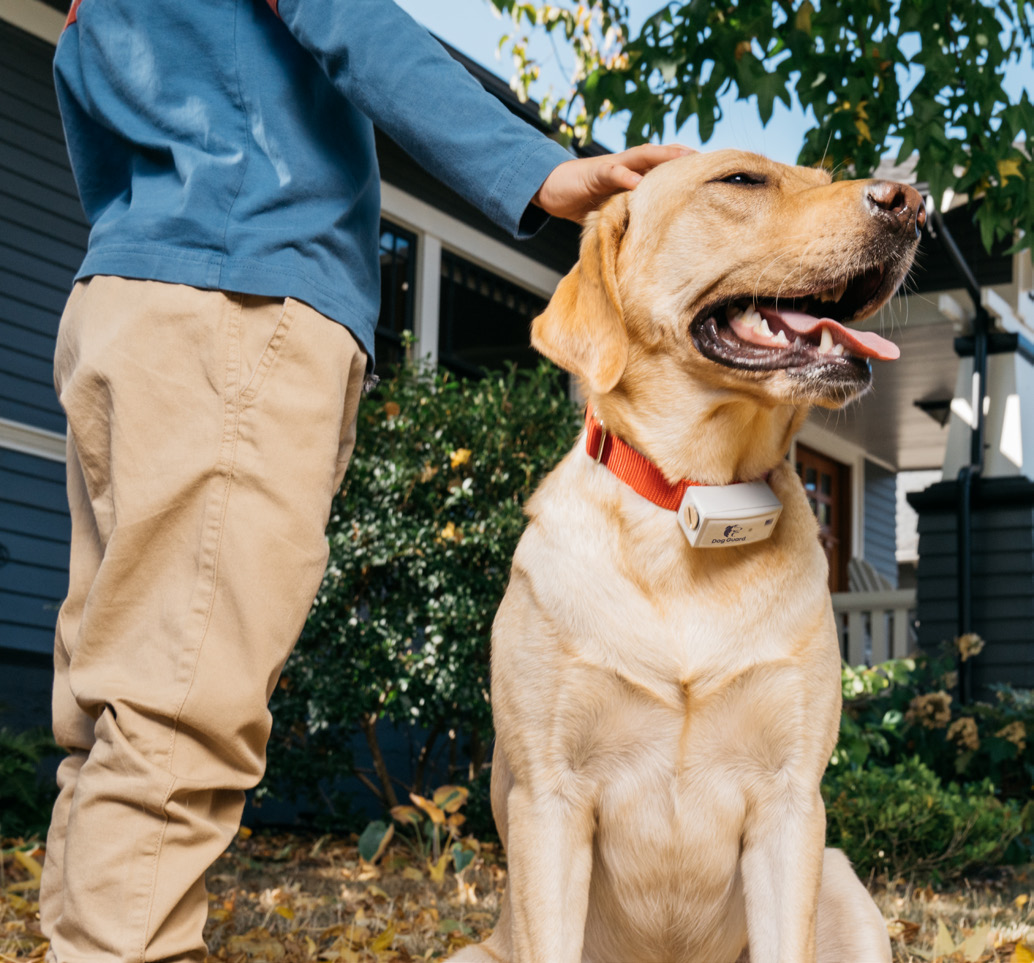
Dogs from about 4 pounds and up can wear a Dog Guard receiver, which weighs under 2 ounces. That covers the Shih Tzu, the Pomeranian, and the rescue terrier, dogs much smaller than GPS collars like Halo can fit. The boundary follows the buried wire, so it works on a compact Omaha lot, while GPS collars typically need a large yard and Halo needs a buffer.
No. The terms "invisible", "invisible fence" and "invisible fencing" are registered and considered trademarks by Invisible Fence, Inc. Electronic pet fences with a buried wire are often referred to as "invisible fences", but Dog Guard® should not be confused with the Invisible Fence, Inc. Dog Guard® is not affiliated in any way with the Invisible Fence, Inc. Dog Guard® and Out of Sight Fencing® are registered trademarks of Sunward Electronics, Inc.